





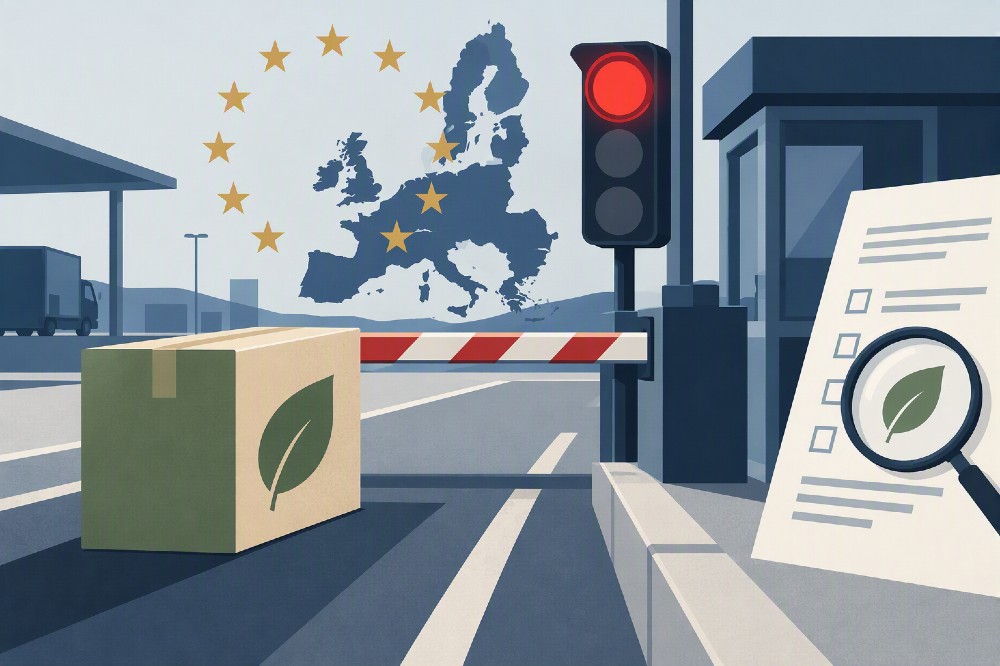
Selling consumer goods through EU distributors: the green-claims questions for UK brands.
27 September 2026 saw the coming into effect across the EU of the Green Transition Directive, which strengthens the rules against misleading environmental marketing, unreliable sustainability labels and certain forms of early obsolescence. The rules operate through each Member State’s consumer legislation. They are directed at B2C conduct, but a UK brand’s own product packaging, brand advertising, online content, sales presentations and approved marketing material may all reach the consumer through its EU distributors.
How the EU changes from the UK position
UK consumer law already requires environmental claims to be truthful, clear, substantiated and presented fairly. The Competition and Market Authority’s Green Claims Code makes that clear. The important difference is that the new EU rules make several practices expressly prohibited in all circumstances.
Broad environmental claims, such as “eco-friendly”, “green”, or “sustainable”, are vulnerable, unless there is recognised excellent environmental performance relevant to the claim. A claim about a product’s climate impact that relies on carbon offsetting outside the product’s value chain is also prohibited. So is the use of a sustainability label that is neither established by a public authority nor supported by an appropriate certification scheme.
In addition, a claim about recycled packaging must not create the impression that the whole product is recycled. A business-wide renewable-energy claim must not disguise the continued use of fossil fuels elsewhere in the business. The words, images, colours and layout may all matter. These are not simply issues for advertising copywriters. They concern the substance and traceability of the information supplied across the distribution chain.
What should a UK brand do?
The first task is to map every consumer-facing statement created or approved by the brand. That includes product labels, swing tickets, packaging, catalogues, product-data sheets, image libraries, brand websites, social-media posts, influencer guidance, retail display material and training supplied to distributors. It should also include claims made by a parent company or group sustainability team which a local distributor is encouraged to use.
Each claim should then be matched to the evidence that supports it. A brand should be able to identify the product, component, factory, process, or period:
- to which the claim relates;
- the methodology which is used;
- the source of the data; and
- any conditions or limitations.
If evidence is incomplete, the claim should be changed or withdrawn rather than left for the distributor to qualify.
Vague language and the need for particular care
“Responsible”, “conscious”, “better for the planet” and similar expressions can suggest a broad environmental benefit that the business may be unable to establish. A more limited and specific statement may be possible, but only if it is accurate, clearly explained and capable of proof.
Sustainability labels
A brand should not assume that a trade-marked device, house badge or brand questionnaire creates a compliant certification scheme. The EU rules require a system with transparent criteria and independent monitoring. The position should be checked before the label is given to distributors for consumer use.
Future commitments
A statement that the business or product will be net zero, climate neutral, or substantially more sustainable by a future date needs more than an aspiration. The new rules require clear, objective and publicly available commitments and targets, a detailed and realistic implementation plan, independent third-party verification and accessible reporting of progress. Marketing should not run ahead of the plan.
Beyond EU language
The Directive is not confined to environmental language. It adds rules about durability, repairability and goods with digital elements. A brand should ensure that its distributors receive reliable information about product lifespan, repair options, availability of spare parts and software updates. A brand that knows that an update will adversely affect a product’s functioning should not allow that information to be withheld from the consumer. Nor should it market a product with a feature designed to limit durability where it knows about that feature and its effects.
The distribution agreement
A brand should consider whether its EU distribution agreement does enough to manage these risks. An agreement should identify which party may make consumer claims, require use of approved and current marketing materials, prevent unauthorised amendments and oblige the distributor to withdraw or correct material promptly when asked.
It should provide for the exchange of evidence and regulatory information, cooperation with consumer authorities and an allocation of responsibility where one party’s material or conduct causes the problem. Indemnities may be appropriate, but they are not a substitute for practical control. The brand’s interest is to prevent an incorrect claim being repeated across several markets, rather than to debate financial responsibility after an investigation begins.
The national laws of the EU
The Directive is implemented through the national laws of each EU member state, and the detail of enforcement, penalties and available consumer remedies can differ. A single EU marketing pack will not necessarily work everywhere. A brand should therefore identify its priority markets and ensure that its distributor has access to country-specific advice where necessary.
Take home point
UK brands should not assume that a B2B sale places consumer marketing outside their responsibility. If their environmental marketing claims shape what the EU consumer sees, the new EU rules should form part of their product marketing and distribution review.
Stephen Sidkin is a partner at Fox Williams LLP. For further information visit:
www.fashionlaw.co.uk
www.sustainabilitylaw.co.uk
www.foxwilliams.com
2026 © Fox Williams LLP